
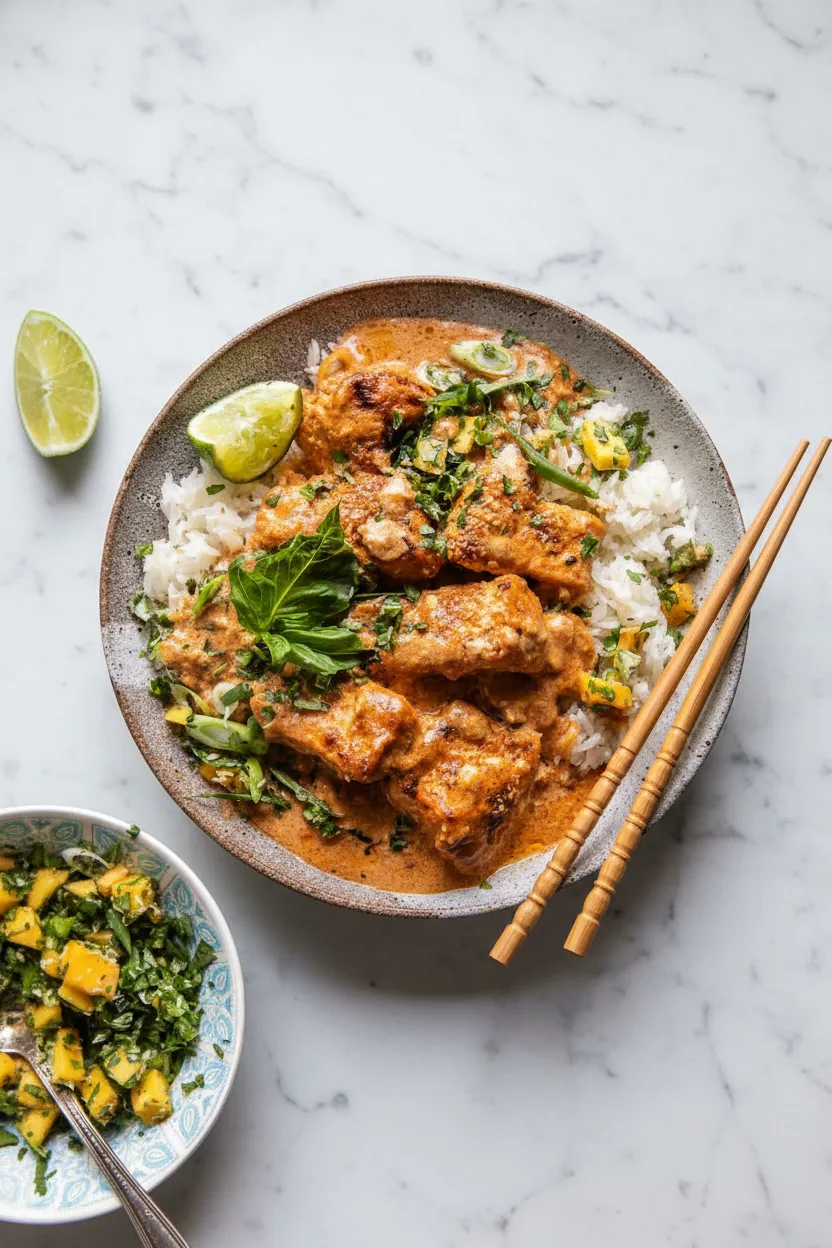
Imagine a meal that feels both indulgent and healthy, bursting with vibrant flavors yet simple enough for a weeknight. This Oven Baked Coconut Curry Salmon delivers exactly that experience. It combines rich, flaky salmon with a creamy, aromatic sauce made from coconut milk and warm spices, all baked together in one dish for minimal cleanup.
The dish is finished with a fresh mango salsa that adds a sweet and tangy contrast, making every bite exciting. Whether you’re cooking for a special dinner or just want to elevate your regular salmon routine, this recipe promises impressive results with straightforward steps.
It’s a culinary adventure that brings restaurant-quality taste right to your home kitchen, using ingredients that blend into something truly special. Let’s get started on creating this flavorful masterpiece.
Why You’ll Love This Coconut Curry Salmon
You will adore this recipe for several compelling reasons. First, the cooking method is incredibly forgiving. Baking the salmon in the sauce keeps it wonderfully moist and prevents it from drying out, a common worry with fish.
Second, the flavor profile is complex and satisfying. The creamy coconut curry sauce coats the salmon perfectly, creating a harmonious blend of savory, spicy, and slightly sweet notes. Third, the vibrant mango salsa on top introduces a fresh, fruity element that cuts through the richness beautifully. This dish is also naturally gluten-free when using tamari and can be adapted for various dietary preferences.
Furthermore, it comes together in about 45 minutes from start to finish, making it a practical choice for busy days. Finally, the aroma that fills your kitchen as it bakes is absolutely irresistible. It’s a meal that looks and tastes like you spent hours, but the effort is surprisingly minimal. For another fantastic one-pan meal, check out our recipe for hearty and comforting keto chicken soup.
Recipe
Print
Oven Baked Coconut Curry Salmon
- Total Time: 45 min
- Yield: 6 servings 1x
Description
Flaky salmon baked in a creamy coconut curry sauce, topped with fresh mango salsa for a vibrant, easy one-pan meal.
Ingredients
- 4 (4-6 ounce) salmon filets, cubed
- 2 ounces cream cheese, at room temperature
- 2–3 tablespoons spicy curry powder
- 1/4 cup Thai red curry paste
- 1 tablespoon fresh grated ginger
- 1 shallot, chopped
- salt and black pepper
- 1 1/2 cups canned full-fat coconut milk
- 3 tablespoons tamari/soy sauce
- 4 tablespoons salted butter
- 1 tablespoon sesame seeds
- 1 mango, diced
- 1 jalapeño, seeded if desired, and chopped
- 2 tablespoons lime juice
- 1/4 cup fresh cilantro or Thai basil, chopped
- 2 green onions, chopped
Instructions
- Preheat the oven to 425°F (220°C).
- In a baking dish, toss together the salmon, cream cheese, curry powder, curry paste, ginger, and shallot. Season with salt and pepper.
- Pour over the coconut milk. Add the tamari. Stir until creamy and well mixed.
- Arrange the butter slices over the salmon. Sprinkle with sesame seeds.
- Bake for 20-30 minutes until the sauce thickens and the salmon is cooked to your liking.
- Meanwhile, make the salsa. Mix everything in a bowl.
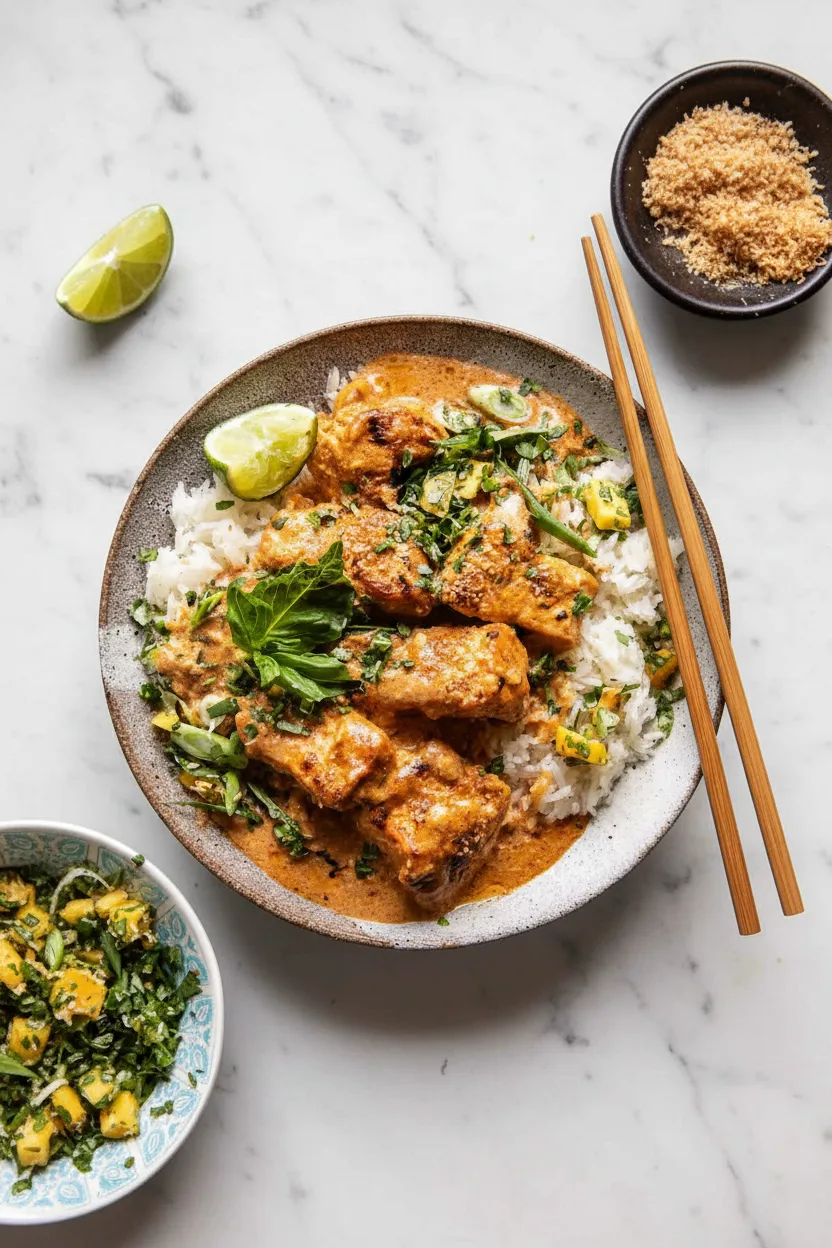
- Serve the salmon and sauce over bowls of rice. Top with lots of mango salsa.
Notes
- For a smoother sauce, ensure the cream cheese is fully at room temperature before mixing.
- The salmon is done when it flakes easily with a fork. Check a few minutes early to avoid overcooking.
- The mango salsa is best made fresh but can be refrigerated for up to an hour before serving.
- Prep Time: 15 min
- Cook Time: 30 min
- Category: Main Course
- Method: Baked
- Cuisine: American
Nutrition
- Calories: 298 kcal
Ingredients and Substitutions
Gathering the right ingredients is the first step to success. Here is what you’ll need, along with some helpful swaps if necessary.
Base Components
Salmon is the star of this show. Use skinless fillets for easier eating and even cooking. You can find individual portions or one larger piece to cut yourself. Cream cheese creates the luxurious, creamy base for the sauce.
Make sure it’s at room temperature so it blends smoothly without lumps. Full-fat coconut milk is essential for that rich, authentic curry flavor and texture. Light coconut milk will make the sauce thinner and less decadent.
Sauce and Seasonings
Curry powder and red curry paste provide the foundational warmth and depth. If you only have one, you can use a bit more of it, but using both creates a more complex flavor. Fresh ginger and shallot add a sharp, aromatic punch that balances the creaminess.
Tamari or soy sauce contributes the necessary savory, umami element. For a gluten-free version, ensure your tamari is certified gluten-free. Salted butter, dotted on top before baking, adds a final layer of richness and helps the sesame seeds toast.
For the Salsa
A ripe mango brings essential sweetness. Look for one that yields slightly to gentle pressure. Jalapeño provides a gentle heat. You can remove the seeds and ribs for a milder salsa or leave them in for more kick. Fresh lime juice and cilantro are the finishing touches that make the salsa bright and lively.
If you’re not a fan of cilantro, fresh basil or mint makes a wonderful substitute. This combination of fresh ingredients perfectly complements the rich, baked salmon.
How to Make Oven Baked Coconut Curry Salmon
Follow these simple steps for a flawless result. The process is mostly hands-off once the dish goes into the oven.
Step 1: Preheat and Prepare
Begin by preheating your oven to 425 degrees Fahrenheit. This high heat ensures the salmon cooks quickly and the sauce reduces to a beautiful, thick consistency. While the oven heats, take a medium baking dish. A 9×13 inch dish works perfectly.
Pat your salmon fillets dry with a paper towel. This helps the seasoning stick better and promotes better browning. Cube the salmon into bite-sized pieces, about one inch thick. This allows the sauce to coat more surface area and speeds up cooking time.
Step 2: Combine the Sauce and Salmon
In the baking dish, combine the cubed salmon, softened cream cheese, curry powder, red curry paste, grated ginger, and chopped shallot. Season generously with salt and black pepper. Use a large spoon or your hands to gently toss everything together until the salmon is evenly coated and the mixture looks creamy.
Pour the canned coconut milk over the salmon mixture. Then, add the tamari or soy sauce. Gently stir again until everything is well mixed and the sauce begins to form. The mixture will look loose at this stage, which is perfectly fine.
Step 3: Add Toppings and Bake
Arrange the salmon pieces in a relatively even layer in the dish. Cut the salted butter into small pieces and scatter them evenly over the top of the salmon and sauce. Sprinkle the sesame seeds over everything. The butter will melt into the sauce as it bakes, enriching it further, and the sesame seeds will become golden and fragrant.
Place the baking dish in the preheated oven. Bake for 20 to 30 minutes. The exact time will depend on the thickness of your salmon pieces. The dish is ready when the salmon flakes easily with a fork and the sauce has thickened noticeably around the edges.
Step 4: Make the Mango Salsa
While the salmon bakes, prepare the fresh salsa. This is the perfect time to do it. In a medium bowl, combine the diced mango, chopped jalapeño, lime juice, chopped cilantro or basil, and chopped green onions. Stir everything together gently.
Let the salsa sit for a few minutes so the flavors can meld. The sweet mango, spicy jalapeño, and acidic lime will create a refreshing contrast to the warm, baked curry. This salsa is also excellent on other dishes like our simple 5-ingredient keto buns for a quick snack.
Pro Tips for Success
Use these professional tips to ensure your salmon turns out perfectly every single time. First, do not skip bringing the cream cheese to room temperature.
Cold cream cheese will not incorporate smoothly and will leave little white lumps in your sauce. Second, for the most flavorful results, toast your curry powder in a dry skillet for about 30 seconds before adding it to the dish.
This simple step wakes up the oils in the spices and intensifies their aroma. Third, check the salmon a few minutes early. Overcooked salmon becomes dry and tough. It is better to check early and add more time if needed. The salmon should just begin to flake when pressed with a fork.
Fourth, let the baked dish rest for five minutes after removing it from the oven. This allows the sauce to thicken a bit more and the salmon to finish cooking gently from residual heat. Finally, taste the sauce before serving and adjust the seasoning. You might want an extra pinch of salt or a squeeze of lime juice to brighten it up. Following these tips guarantees a restaurant-worthy meal at home.
Flavor Variations
This recipe is wonderfully adaptable. Feel free to experiment with different proteins. Firm white fish like cod or halibut work beautifully, though cooking time may need slight adjustment. For a vegetarian version, try using large cauliflower florets or chickpeas. You can also play with the curry profile.
Use yellow curry paste for a milder, slightly sweeter flavor or green curry paste for a brighter, more herbal note. For extra vegetables, stir in some spinach or chopped kale during the last five minutes of baking. The heat will wilt them perfectly into the sauce.
If you love a bit of crunch, sprinkle some chopped roasted peanuts or cashews on top just before serving. The creamy sauce pairs wonderfully with the nutty texture. For a completely different but equally delicious baked dish, explore our recipe for cheesy keto chicken fritters.
Serving Suggestions
This coconut curry salmon is incredibly versatile when it comes to serving. The classic and most satisfying way is over a bed of fluffy white rice or fragrant jasmine rice. The rice soaks up the delicious sauce, making every spoonful a delight. For a low-carb or grain-free option, serve it over cauliflower rice, zucchini noodles, or a simple bed of sautéed greens like spinach or Swiss chard. A side of steamed broccoli or roasted asparagus complements the rich flavors nicely.
Don’t forget to spoon plenty of the fresh mango salsa over each portion. The salsa adds color, freshness, and a vital pop of acidity. For a complete meal, start with a light cucumber salad or a bowl of miso soup. Leftovers, if you have any, are fantastic the next day, served cold over a bed of mixed greens for a hearty salad. The flavors deepen overnight, making it a fantastic make-ahead option for lunches.
Storage and Freezing Instructions
Proper storage keeps your meal tasting great. To store leftovers, allow the salmon and sauce to cool completely to room temperature. Then, transfer them to an airtight container. You can store the mango salsa separately in its own container. Refrigerated, the baked salmon will stay fresh for up to three days.
To reheat, place the salmon and sauce in a covered oven-safe dish and warm in a 300-degree Fahrenheit oven until heated through. You can also reheat gently in a saucepan on the stovetop over low heat, adding a splash of water or coconut milk if the sauce has thickened too much.
Microwaving is possible but may slightly overcook the salmon. This dish can also be frozen for longer storage. Place cooled portions in a freezer-safe container, leaving a little space for expansion. It will keep well for up to two months.
Thaw overnight in the refrigerator before reheating using the methods above. Note that the texture of the salmon may be slightly softer after freezing and thawing, but the flavor will remain excellent. The mango salsa is best enjoyed fresh and does not freeze well.
FAQs About Coconut Curry Salmon
Can I use frozen salmon?
Yes, you can use frozen salmon. Thaw it completely in the refrigerator overnight first. Pat it very dry with paper towels before cubing and using it in the recipe. Excess water from frozen fish can make the sauce watery.
My sauce is too thin. How can I thicken it?
If your sauce is thinner than you’d like after baking, you have a couple of options. You can simmer the dish on the stovetop for a few extra minutes without the salmon to reduce the sauce. Alternatively, mix one teaspoon of cornstarch with one tablespoon of cold water to create a slurry. Stir this into the hot sauce and let it cook for another minute or two until thickened.
Can I make this dish spicier?
Absolutely. To increase the heat, add a pinch of red pepper flakes to the sauce mixture before baking. You can also use a hotter variety of curry paste or include some of the jalapeño seeds in your mango salsa. Adjust the heat level to your personal preference.
What can I use instead of mango in the salsa?
If mango is not available or not to your taste, diced pineapple makes an excellent substitute. It provides a similar sweet and tropical flavor. Peaches or nectarines in season also work wonderfully. For a less sweet option, try using diced papaya or even pomegranate arils for a burst of tartness.
Is this recipe dairy-free?
The recipe as written contains cream cheese and butter, which are dairy products. To make it dairy-free, you can substitute the cream cheese with a plain, unsweetened dairy-free cream cheese alternative. Replace the butter with a dairy-free butter alternative or simply omit it. The sauce will still be creamy from the coconut milk.
Final Thoughts
This Oven Baked Coconut Curry Salmon is more than just a recipe. It is a gateway to easy, impressive, and deeply satisfying meals. The fusion of creamy coconut curry with tender salmon creates a comforting yet elegant dish that appeals to a wide range of palates. The fresh mango salsa on top is not just a garnish.
It is a crucial component that lifts the entire dish with its brightness. This one-pan wonder simplifies dinner preparation and cleanup, giving you more time to enjoy the meal with family or friends. It is perfect for a quiet weeknight but special enough for guests.
The flexibility of the recipe means you can adapt it based on what you have available, making it a reliable staple in your cooking repertoire. We hope you love making and eating this delightful salmon as much as we do. Give it a try tonight, and transform your ordinary dinner into an extraordinary culinary experience.