
Welcome to your new favorite healthy weeknight meal. This Pasta Primavera recipe is a celebration of seasonal produce, transforming fresh vegetables into a vibrant, light spring dinner that is as nutritious as it is beautiful.
Perfect for a quick meatless dinner, this dish combines al dente spaghetti with a medley of sautéed spring vegetables in a light, creamy Parmesan sauce. It’s a classic recipe that brings the essence of the season to your table in under 40 minutes.
We’ll guide you through every step, offering tips for perfect vegetable texture and sauce consistency. Plus, we’ll show you how this recipe fits perfectly into a balanced lifestyle, much like our other fresh favorites, such as our Avocado Lime Deviled Eggs.
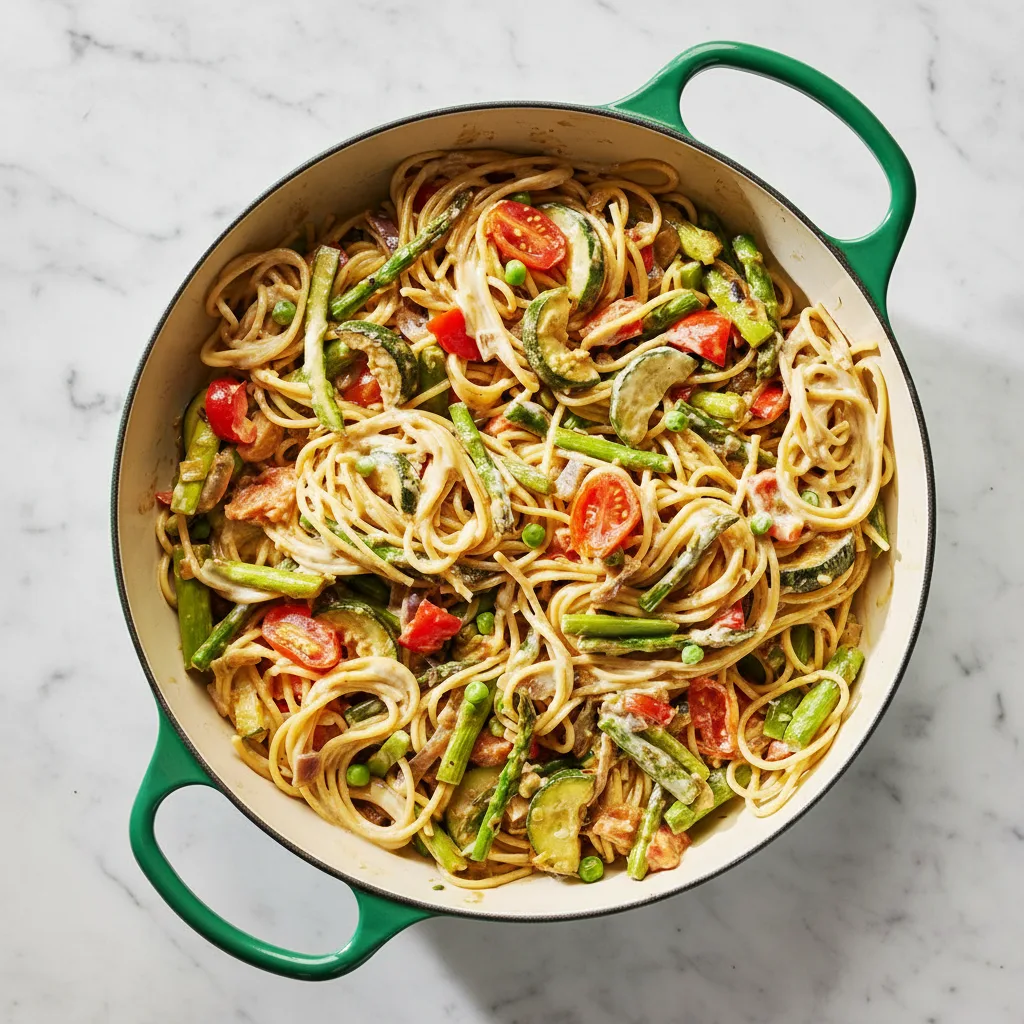
Why You’ll Love This Pasta Primavera Recipe
This easy vegetarian pasta is more than just a meal; it’s a versatile canvas for whatever vegetables are at their peak. The key to its success is cooking each vegetable type separately to achieve the ideal texture, then bringing everything together in a simple, glossy sauce.
The result is a colorful veggie pasta where every bite offers a different combination of flavors and textures. It’s a fantastic way to enjoy a healthy weeknight meal that feels special and satisfying without being heavy.
Ingredient Spotlight: The Vegetable Medley
The beauty of Pasta Primavera lies in its adaptability. Our chosen combination of zucchini, asparagus, leeks, red bell pepper, and grape tomatoes creates a symphony of sweet, savory, and slightly earthy notes. Each vegetable contributes something unique:
- Zucchini and Asparagus: Provide a tender-crisp texture and vibrant green color, symbolizing spring.
- Leeks and Red Onion: Offer a sweet, aromatic base that caramelizes beautifully.
- Red Bell Pepper and Grape Tomatoes: Add pops of color, sweetness, and a slight acidity.
- Peas: Bring a touch of sweetness and classic ‘primavera’ character.
For a different take on a classic, protein-packed side, explore our Classic Southern Deviled Eggs with Paprika.
Step-by-Step Cooking Instructions
Follow these steps to create the perfect light spring dinner. The process is about layering flavors and respecting each ingredient’s cooking time.
Step 1: Cook the Pasta
In a large pot of boiling, generously salted water, cook 12 oz. of spaghetti, stirring occasionally. Cook it until just under al dente, about 6 to 7 minutes. The pasta will finish cooking in the sauce. Before draining, be sure to reserve 1 1/2 to 2 cups of the precious starchy pasta water. This liquid gold is essential for creating a silky, emulsified sauce later.
Step 2: Sauté the Green Vegetables
Meanwhile, in a large high-sided skillet over medium-high heat, heat 1/4 cup of extra-virgin olive oil. Add the sliced zucchini and cook, stirring occasionally, until it starts to soften and turn lightly golden but is still a vibrant green, about 3 to 4 minutes. Season with 1/2 teaspoon of kosher salt. Add the asparagus quarters, season with another 1/2 teaspoon of salt, and cook, stirring often, for about 4 minutes until the asparagus is vibrant and tender-crisp. Transfer these cooked vegetables to a plate and set aside.
Step 3: Build the Aromatic Base
Reduce the heat to medium. If the skillet looks dry, add another 1 to 2 tablespoons of oil. Add the sliced red onion and leeks. Cook, stirring occasionally, until they begin to wilt and caramelize, about 5 minutes; season with 1 teaspoon of salt. Add the chopped red bell pepper and cook, stirring and reducing heat if needed, for 3 to 4 more minutes until slightly softened. Stir in the finely chopped garlic and cook for about 2 minutes until fragrant and the onions are translucent.
Step 4: Create the Creamy Sauce
Reduce the heat to medium-low. To the skillet, add the grape tomatoes, 3/4 cup of heavy cream, the thawed peas, and 1/2 cup of the reserved pasta water. Cook, stirring occasionally, for 2 to 3 minutes until the tomatoes are tender and beginning to burst, creating a luscious, pink-tinged sauce.
Step 5: Combine and Finish the Dish
Add the undercooked spaghetti, the reserved zucchini and asparagus, and 2 oz. of finely grated Parmesan cheese to the skillet. Add another splash of pasta water and cook, tossing everything to combine vigorously. Continue adding pasta water as needed until the sauce is glossy, clings to the pasta, and the cheese is fully melted.
For a bright finish, stir in the zest and juice from one small lemon (if using) and season generously with freshly ground black pepper. Serve immediately with extra Parmesan on the side.
For another recipe that masterfully combines creamy and bright flavors, check out our Keto Deviled Egg Salad.
Expert Tips for the Best Pasta Primavera
- Don’t Crowd the Pan: Sautéing the zucchini and asparagus in batches ensures they sear properly instead of steaming, giving them better flavor and texture.
- Pasta Water is Key: The starchy pasta water helps bind the cream, cheese, and olive oil into a smooth, restaurant-quality sauce that coats every strand.
- Freshly Grated Parmesan: Always grate your own Parmesan from a block. Pre-grated cheese contains anti-caking agents that can make your sauce grainy.
- Vegetable Variations: Feel free to substitute with seasonal favorites like sugar snap peas, broccoli florets, or yellow squash.
Nutritional Profile & Dietary Information
This Pasta Primavera recipe is a well-rounded meal, offering a good balance of carbohydrates, protein, and healthy fats from the olive oil. The variety of vegetables provides essential vitamins, minerals, and 5 grams of dietary fiber per serving. It’s a hearty yet light spring dinner that fits beautifully into a balanced diet.
| Nutrient | Amount per Serving |
|---|---|
| Calories | 486 Calories |
| Total Fat | 23 g |
| Carbohydrates | 51 g |
| Fiber | 5 g |
| Sugar | 8 g |
| Protein | 15 g |
| Sodium | 679 mg |
Frequently Asked Questions
Can I make Pasta Primavera ahead of time?
This dish is best served immediately. However, you can prep all the vegetables in advance to streamline the cooking process on a busy weeknight. The sauce may thicken upon standing; simply reheat with a little extra cream, milk, or vegetable broth to loosen it.
Can I make this recipe dairy-free or vegan?
Absolutely! For a dairy-free version, omit the Parmesan and substitute the heavy cream with full-fat canned coconut milk or a plain, unsweetened plant-based creamer. For a vegan pasta primavera, also use a plant-based Parmesan alternative and ensure your pasta is egg-free.
What protein can I add to this pasta?
While delicious as a vegetarian pasta, you can easily add protein. Grilled chicken breast, shrimp, or white beans are excellent additions that complement the fresh vegetables without overpowering them.
Conclusion: Your Go-To Vegetable Pasta Dinner
This Pasta Primavera recipe proves that a quick meatless dinner can be the highlight of your week. It’s a testament to how simple, fresh ingredients can come together to create something truly spectacular.
With its rainbow of vegetables and creamy, light sauce, it’s a colorful veggie pasta that will please the whole family and make any weeknight feel like a celebration. We hope this easy vegetarian pasta becomes a staple in your recipe rotation, bringing a taste of spring to your table all year round.
Recipe
Print
Pasta Primavera
- Total Time: 40 min
- Yield: 6 servings 1x
- Diet: Vegetarian
Description
A vibrant and easy vegetarian pasta loaded with spring vegetables in a light, creamy Parmesan sauce. The perfect quick meatless dinner!
Ingredients
- Kosher salt
- 12 oz. spaghetti
- 1/4 c. (or more) extra-virgin olive oil
- 1 large zucchini, sliced into 1/2” half-moons
- 1 bunch asparagus, trimmed, quartered crosswise
- 1/2 red onion, sliced into 1/4” half-moons
- 2 small leeks, cut into 1/2” half-moons
- 1 red bell pepper, seeds and ribs removed, chopped
- 5 cloves garlic, finely chopped
- 1 c. grape tomatoes
- 3/4 c. heavy cream
- 1/3 c. frozen peas, thawed
- 2 oz. Parmesan, finely grated, plus more for serving
- Lemon zest and juice from 1 small lemon (optional)
- Freshly ground black pepper
Instructions
- In a large pot of boiling salted water, cook pasta until just under al dente, 6 to 7 minutes. Reserve 1 1/2 to 2 cups pasta water.
- Meanwhile, in a large skillet over medium-high heat, heat 1/4 cup oil. Cook zucchini for 3-4 minutes; season with salt. Add asparagus, season, and cook for 4 minutes. Transfer to a plate.
- Reduce heat to medium. Add oil if needed. Add onions and leeks, cook for 5 minutes; season. Add bell pepper, cook 3-4 minutes. Add garlic, cook 2 minutes.
- Reduce heat to medium-low. Add tomatoes, cream, peas, and 1/2 cup pasta water. Cook 2-3 minutes until tomatoes soften.
- Add spaghetti, reserved vegetables, Parmesan, and a splash of pasta water. Cook, tossing and adding water as needed, until sauce is glossy.
- Stir in lemon zest and juice (if using); season with pepper.
Notes
- Use reserved starchy pasta water to create a silky, emulsified sauce.
- Grate your own Parmesan from a block for the smoothest sauce.
- Feel free to substitute vegetables based on seasonality.
- Prep Time: 15 min
- Cook Time: 25 min
- Category: Main Course
- Method: Baked
- Cuisine: American
Nutrition
- Calories: 486 Calories
- Sugar: 8 g
- Sodium: 679 mg
- Fat: 23 g
- Saturated Fat: 9 g
- Carbohydrates: 51 g
- Fiber: 5 g
- Protein: 15 g
- Cholesterol: 45 mg