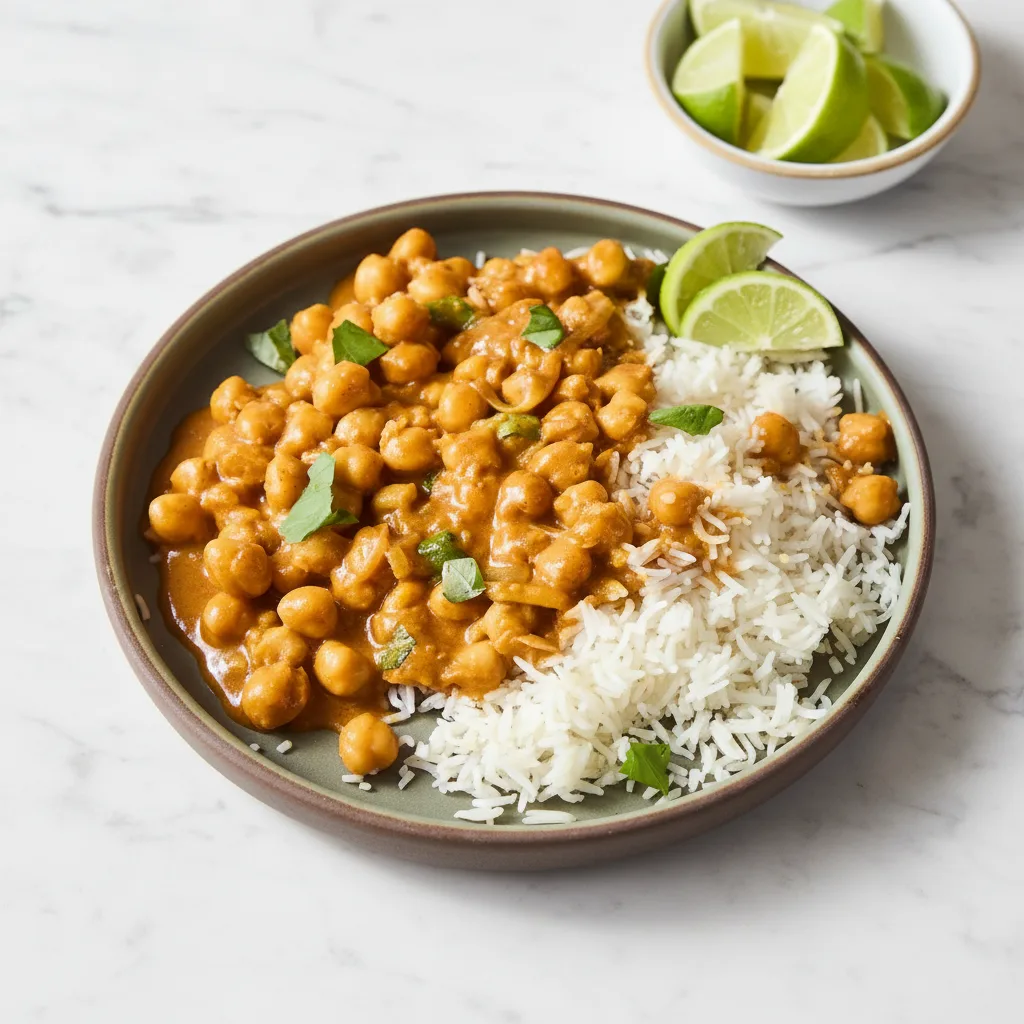

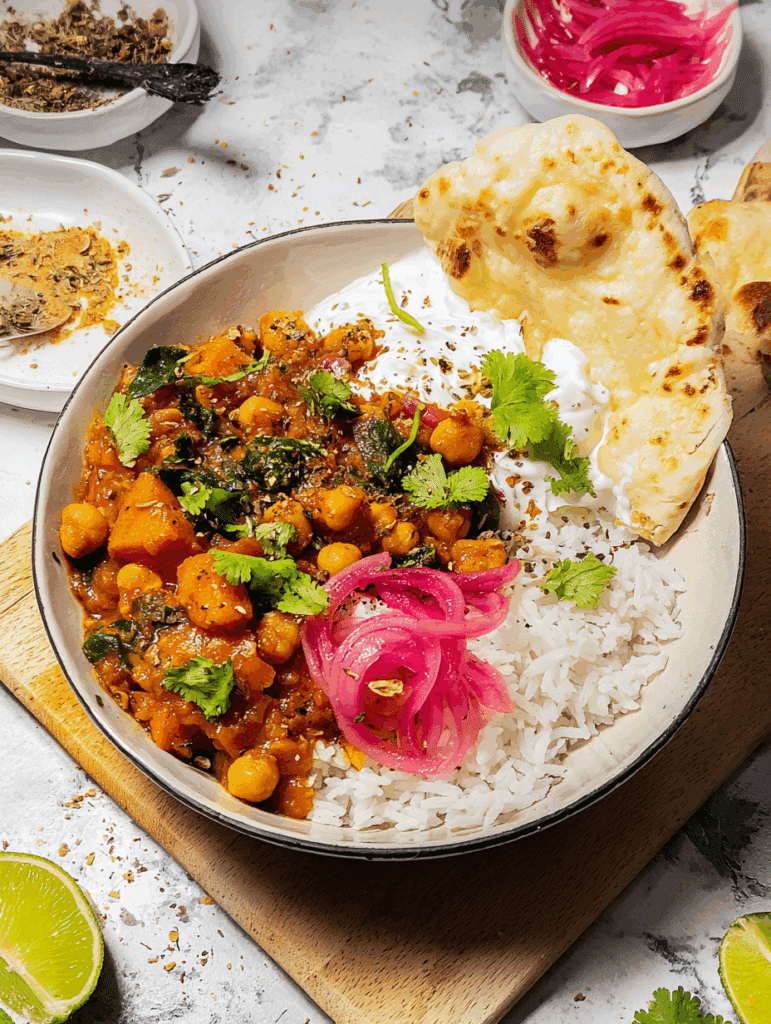
Sweet Potato & Chickpea Curry is creamy, satisfying, and perfect for anyone focused on calorie deficit meals. Packed with chickpeas and wholesome veggies, it’s a budget-friendly dish that fits low-calorie lunches, clean eating recipes, or cozy dinners.
Why Sweet Potato & Chickpea Curry Works for Low Calorie Diets
Sweet Potato & Chickpea Curry is more than a comfort meal. It’s proof that calorie deficit recipes don’t have to feel boring or restrictive. This bowl delivers a filling mix of protein, fiber, and plant-based goodness while staying friendly to a low calorie diet.
Nutritional benefits of sweet potatoes and chickpeas
Sweet potatoes bring natural sweetness, steady energy, and beta-carotene for vibrant health. Chickpeas add plant protein and fiber, keeping you full longer, which makes them a smart choice for calorie deficit meals. Together, they create balance—enough carbs for energy, enough protein for satisfaction, and plenty of fiber for digestion. This pairing turns simple pantry staples into a powerful low cal meal.
A versatile clean eating recipe
What makes this curry even better is its adaptability. Whether you’re after easy healthy meals for lunch prep, or a hearty low calorie dinner to share with family, this recipe delivers. It’s naturally vegan, packed with whole ingredients, and free from overly processed add-ons. If you love plant-powered dishes, you might also enjoy these sweet potato black bean tacos, which carry the same balance of flavor and nutrition in a different form. Both recipes prove that healthy eating recipes can be exciting and satisfying at the same time.
Recipe
Print
Sweet Potato & Chickpea Curry
- Total Time: 1 hour
- Yield: 4 servings 1x
Description
A creamy, hearty curry made with sweet potatoes, chickpeas, and spinach simmered in coconut milk. Perfect for calorie deficit meals, low calorie dinners, and easy healthy meals.
Ingredients
- 1 tablespoon coconut oil (15 ml)
- 1 onion, finely chopped (150 g)
- 3 cloves garlic, minced (9 g)
- 2 tablespoons mild curry powder (14 g)
- ½ teaspoon chili flakes (1 g)
- 3 tablespoons tomato paste (45 g)
- 2 large sweet potatoes, peeled and diced (1.5 lb / 680 g)
- 2 cans chickpeas, drained and rinsed (2 x 14 oz / 800 g total)
- 1 can full-fat coconut milk (13.5 fl oz / 400 ml)
- 2 cups vegetable stock (500 ml)
- Salt and black pepper to taste
- 3 cups fresh spinach (90 g)
- Fresh cilantro for garnish (15 g)
- For the coconut rice:
- 1 cup basmati rice (7 oz / 200 g)
- 1 can full-fat coconut milk (13.5 fl oz / 400 ml)
- 1 cup water (240 ml)
- 1 pinch salt (1 g)
- For serving:
- Coconut yogurt (60 g per serving, optional)
- Pickled red onions (30 g per serving, optional)
- Fresh cilantro, chopped (10 g per serving)
Instructions
- Rinse basmati rice until water runs clear. In a saucepan, combine rice, coconut milk, water, and salt. Bring to a boil, reduce heat, cover, and simmer 15–20 minutes until liquid is absorbed. Rest 5 minutes, fluff with fork.
- In a large pot, heat coconut oil over medium heat. Add onion and cook 5 minutes until softened. Stir in garlic, curry powder, and chili flakes; cook 1 minute until fragrant.
- Add tomato paste, stir, and cook 2 minutes. Add diced sweet potatoes and chickpeas, stirring to coat with spices and paste.
- Pour in coconut milk and vegetable stock. Stir well, bring to a simmer, reduce heat, and cook 20–25 minutes until sweet potatoes are tender and sauce thickens. Season with salt and black pepper.
- Stir in spinach just before serving and let it wilt into the curry.
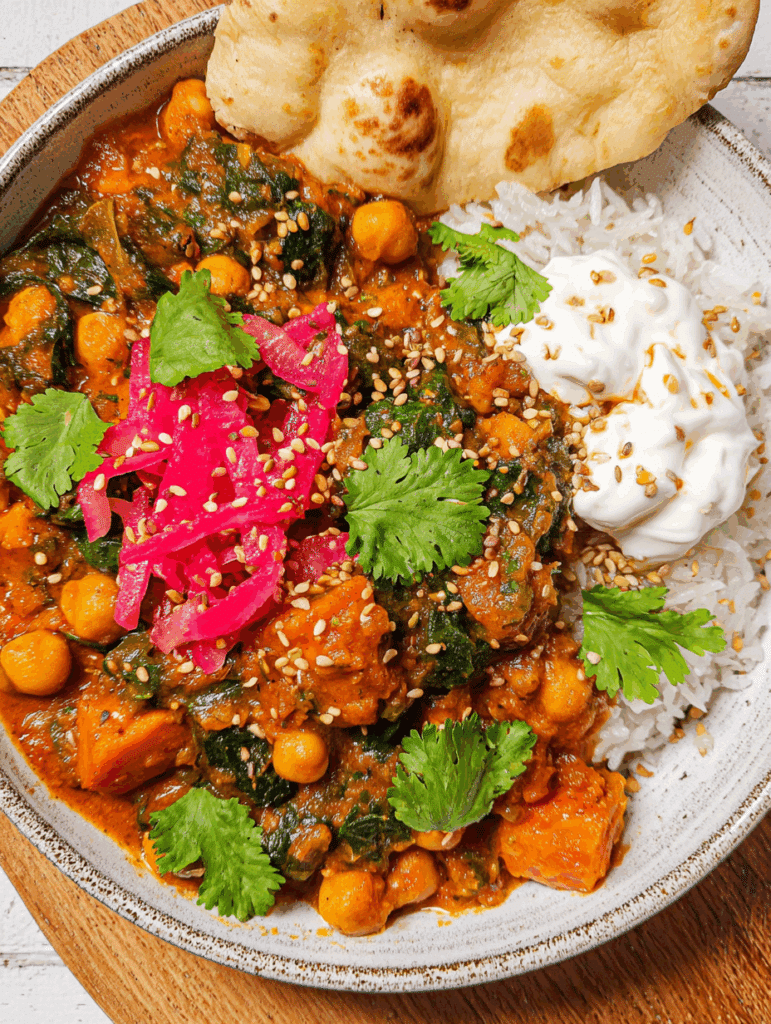
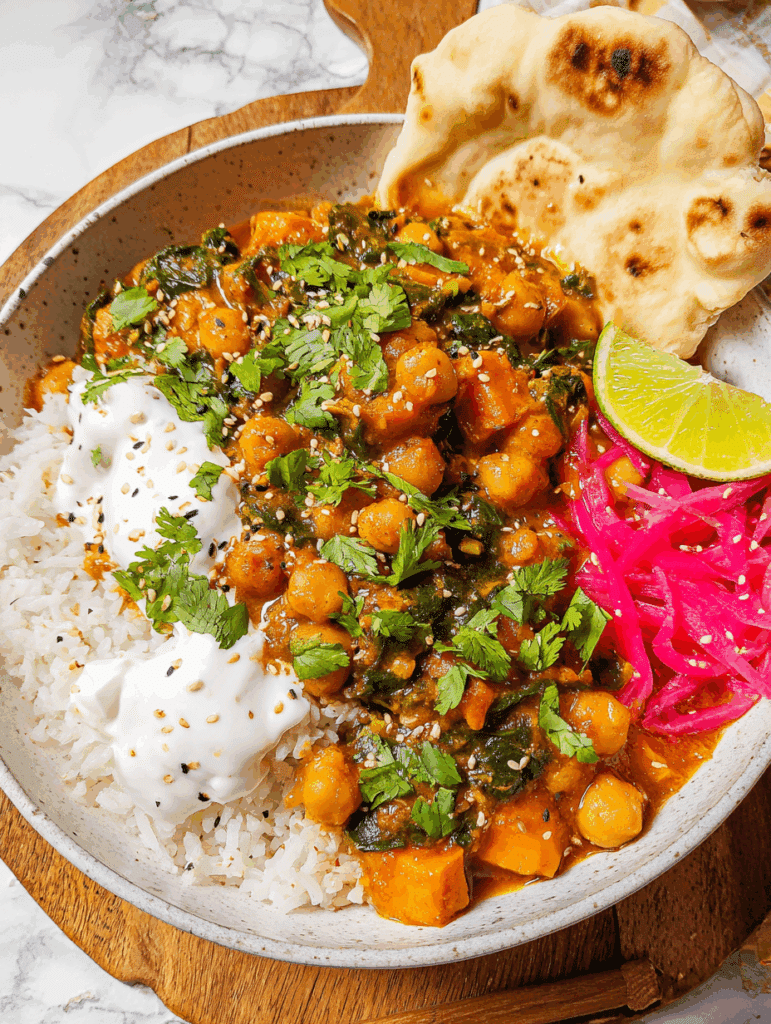
- Serve curry hot over coconut rice. Garnish with coconut yogurt, pickled onions, and chopped cilantro.
Notes
- Store leftovers in airtight containers for up to 4 days in the fridge.
- Freeze curry in portions for up to 3 months. Store rice and curry separately.
- Reheat gently with a splash of water or coconut milk.
- Add extra veggies like zucchini, carrots, or bell peppers for variety.
- For added flavor, squeeze lime juice over before serving.
- Use light coconut milk if you want a lighter sauce.
- Prep Time: 15 minutes
- Cook Time: 45 minutes
- Category: Main Course
- Method: Stovetop
- Cuisine: Indian, Vegan
Nutrition
- Serving Size: 1 serving
- Calories: 420
- Sugar: 9 g
- Sodium: 520 mg
- Fat: 18 g
- Saturated Fat: 9 g
- Unsaturated Fat: 7 g
- Trans Fat: 0 g
- Carbohydrates: 54 g
- Fiber: 11 g
- Protein: 12 g
- Cholesterol: 0 mg
Building Flavor with Simple Ingredients
Flavor is everything when you’re trying to keep calorie deficit meals interesting. Luckily, this curry layers taste beautifully with just a few everyday ingredients. Each element adds depth without piling on extra calories, which makes it perfect for low calorie dinners and easy healthy meals.
The role of spices and aromatics
This curry starts with coconut oil, onions, garlic, and curry powder. That foundation creates an aromatic base that smells amazing from the moment it hits the pan. Garlic adds sharpness, curry powder brings warmth, and a pinch of chili flakes adds gentle heat. Tomato paste then rounds it out with rich acidity. The best part? None of these steps rely on heavy cream or butter, so you’re getting maximum taste with minimal calories. When you’re chasing clean eating recipes, spices are your best friend because they transform simple vegetables into vibrant meals.
Creaminess without compromise
Coconut milk gives the curry its creamy texture. It balances the spices while adding a silky mouthfeel that feels indulgent without making it overly heavy. Vegetable stock keeps the sauce light, while fresh spinach stirred in at the end brings brightness and nutrients. Together, the mix hits every note—comforting, rich, and nourishing. For anyone who craves that same luscious sauce found in Indian-inspired dishes, this is a smart alternative to classics like Indian butter chickpeas. You’ll enjoy the same cozy flavor profile, but in a lighter, low cal meal that fits perfectly into a calorie deficit diet.
A Step-by-Step Guide to Cooking
Cooking Sweet Potato & Chickpea Curry doesn’t take advanced skills, just a little patience and a few tools. The process is simple, yet it produces a dish rich in flavor and perfect for low calorie lunches or weeknight dinners.
Cooking the coconut rice base
Start with the rice. Rinsing it well removes extra starch, which helps you get those light, fluffy grains. When simmered with coconut milk and water, the rice takes on a fragrant creaminess that pairs perfectly with the curry. This coconut rice makes the meal more satisfying than plain rice, so even smaller portions can keep you full—ideal for a calorie deficit diet. Plus, the base transforms an easy healthy meal into something special without adding unnecessary calories.
Bringing the curry together
The curry comes together in one pot. Begin with onions, garlic, curry powder, and chili flakes, letting them sizzle until fragrant. Add tomato paste for richness, then stir in diced sweet potatoes and chickpeas. Once the coconut milk and stock go in, let the pot simmer until the sweet potatoes turn tender and the sauce thickens. Just before serving, fold in fresh spinach so it wilts into the sauce. A squeeze of lime or a dollop of coconut yogurt on top balances the flavors beautifully.
Here’s a quick look at the timing to help with planning:
| Step | Time Required |
|---|---|
| Prep ingredients | 15 minutes |
| Cook coconut rice | 15–20 minutes |
| Simmer curry | 20–25 minutes |
| Final assembly | 5 minutes |
From start to finish, you’ll have a low cal meal ready in about an hour—hearty, flavorful, and perfect for both clean eating recipes and calorie deficit meals.
Making It Work for a Calorie Deficit
Sweet Potato & Chickpea Curry isn’t just delicious—it’s practical for anyone balancing meals in a calorie deficit diet. With the right portions and planning, this dish can become a go-to for low calorie dinners or meal prep days.
Portion control and balance
The beauty of this curry lies in its flexibility. If you’re looking to lower calories, reduce the amount of coconut rice served and increase the portion of curry itself. Adding extra non-starchy vegetables like zucchini, carrots, or green beans can also bulk up your plate without adding many calories. This keeps you satisfied and helps manage hunger, which is key for calorie deficit meals. A scoop of curry over a smaller bed of rice turns into a low calorie lunch that doesn’t feel restrictive.
Meal prep and storage
This recipe also shines for easy healthy meals throughout the week. Store leftovers in the fridge for up to four days or freeze in portions for longer. Keeping rice and curry in separate containers helps maintain the best texture when reheating. A quick splash of water or coconut milk revives the sauce if it thickens. For variety in your weekly menu, try switching it up with dishes like peanut chickpea protein bowls, which also balance protein, fiber, and flavor in a meal-prep friendly format. Together, these recipes prove that calorie deficit recipes don’t have to be repetitive—they can be flavorful, diverse, and supportive of your goals.
Variations and Customizations for Healthy Eating Recipes
One of the best parts about Sweet Potato & Chickpea Curry is how easy it is to customize. A few small tweaks can turn this into a new dish every time, keeping your low calorie meals exciting and fresh.
Adding variety with extra veggies
If you want more bulk without extra calories, toss in vegetables like zucchini, bell peppers, cauliflower, or carrots. These options bring color, texture, and nutrients while keeping the recipe friendly for a low calorie diet. Using seasonal produce also makes it more budget-friendly and sustainable. This approach keeps clean eating recipes fun while ensuring your plate is packed with fiber and vitamins. For another hearty plant-based idea, check out this vegetarian chili recipe that follows the same principle—nutrient-dense meals that still taste amazing.
Adjusting spice levels and garnishes
Heat levels are completely in your hands. For those who enjoy a gentle warmth, stick with mild curry powder and a pinch of chili flakes. If you prefer more kick, add fresh chili or extra flakes during cooking. Garnishes also let you personalize each serving. Coconut yogurt adds creaminess, lime juice brightens the flavors, and pickled onions give a tangy bite. By mixing and matching these toppings, you can enjoy the same recipe in multiple ways without adding much to the calorie count. That flexibility is exactly what makes this dish a staple in easy healthy meals and sustainable calorie deficit recipes.