
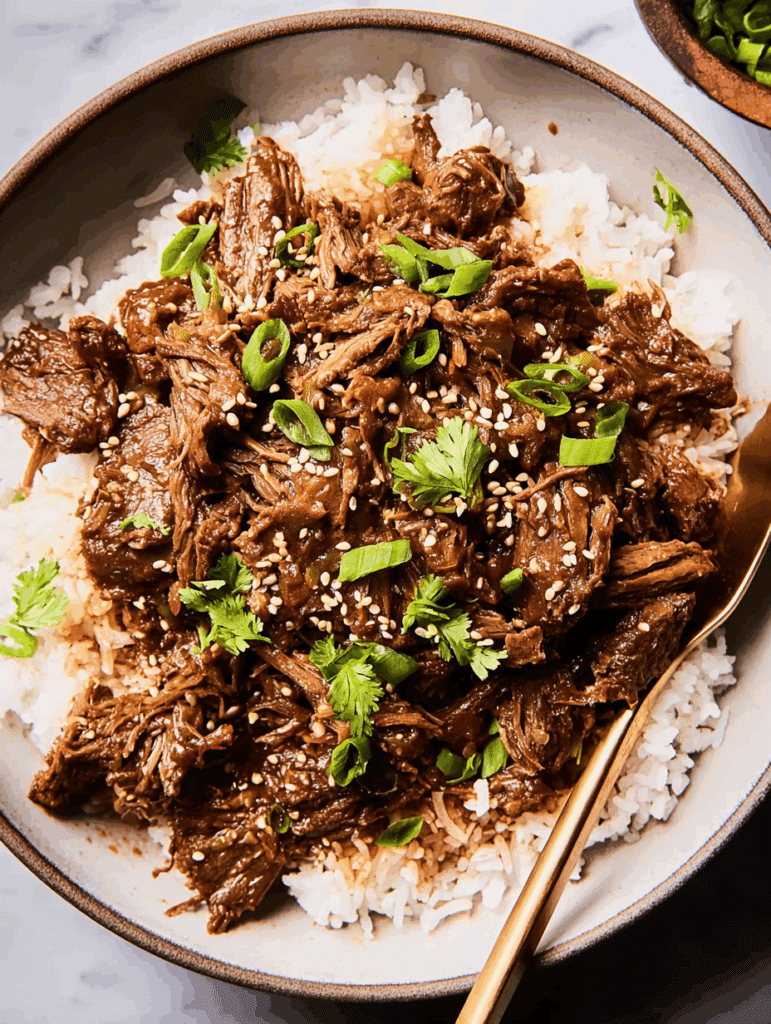
Slow-Cooker Korean Beef is the kind of recipe that makes dinner feel special without adding stress to your day. With tender beef, a savory-sweet sauce, and just ten minutes of prep, this dish brings bold Korean flavors straight to your table. It’s comfort food that works every time.
Why Slow-Cooker Korean Beef Wins Every Time
The appeal of Korean beef at home
There’s something irresistible about the way Korean beef balances flavors. The soy sauce adds depth, the brown sugar brings subtle sweetness, and the ginger and garlic cut through with a punchy freshness. Add gochujang for a touch of heat, and you’ve got a recipe that’s bold yet approachable. It’s the same flavor balance that makes dishes like Skinny Crockpot Beef and Broccoli so popular, but this version is even easier thanks to the slow cooker.
Convenience of the slow cooker
One of the biggest draws of slow-cooker Korean beef is how hands-off it feels. After just a few minutes of whisking sauce and cutting beef, the slow cooker does the heavy lifting. You don’t need to watch over it or worry about overcooking. By the time dinner rolls around, you’ve got tender, fall-apart beef ready to serve. For busy families or anyone balancing work and home, it’s a game-changer.
Recipe
Print
Slow-Cooker Korean Beef
- Total Time: 6 hours 10 minutes
- Yield: 4-6 servings
Description
Tender, savory-sweet Slow-Cooker Korean Beef with a touch of heat from gochujang. This high-protein recipe is effortless to prepare and perfect for family dinners or meal prep.
Ingredients
- Ginger, peeled and finely chopped – 1 piece (2 in / 5 cm)
- Garlic, finely chopped – 4 cloves
- Low-sodium beef broth – 3/4 cup (180 ml)
- Light brown sugar, packed – 1/2 cup (100 g)
- Reduced-sodium soy sauce – 1/3 cup (80 ml)
- Gochujang – 1/4 cup (60 g)
- Toasted sesame oil – 2 tbsp (30 ml)
- Unseasoned rice vinegar – 2 tbsp (30 ml)
- Cornstarch – 1 tbsp (8 g)
- Beef shoulder, trimmed and cut into 1 ½ in (4 cm) pieces – 4 lb (1.8 kg)
- Cooked white rice, for serving – about 6 cups (900 g)
- Scallions, chopped – 1/2 cup (50 g)
- Fresh cilantro, chopped – 1/4 cup (15 g)
- Toasted sesame seeds – 2 tbsp (18 g)
Instructions
- Whisk together broth, soy sauce, brown sugar, ginger, garlic, gochujang, sesame oil, rice vinegar, and cornstarch in a 6-quart slow cooker.
- Add beef and stir until evenly coated in the sauce.
- Cover and cook on high for 5 to 6 hours until the beef is fork-tender.
- Turn off the slow cooker and uncover. Let the dish cool for 15 minutes.
- Skim excess fat from the surface, leaving a thin layer for flavor.
- Shred beef into bite-sized pieces using two forks, then stir back into the sauce.
- Serve over rice and garnish with scallions, cilantro, and sesame seeds.
Notes
- Use flank steak or chuck roast if beef shoulder isn’t available.
- Pair with cauliflower rice or quinoa for a lighter option.
- Leftovers keep well in the fridge for up to 4 days or in the freezer for 3 months.
- Prep Time: 10 minutes
- Cook Time: 6 hours
- Category: Dinner, Main Course
- Method: Slow Cooker
- Cuisine: Korean-inspired
Nutrition
- Serving Size: 1 portion (of 6)
- Calories: 626
- Sugar: 19 g
- Sodium: 1188 mg
- Fat: 24 g
- Saturated Fat: 7 g
- Unsaturated Fat: 16 g
- Trans Fat: 1 g
- Carbohydrates: 32 g
- Fiber: 1 g
- Protein: 66 g
- Cholesterol: 172 mg
Key Ingredients That Build the Flavor
Core flavor builders
The heart of slow-cooker Korean beef lies in its sauce. Each ingredient pulls its weight:
- Soy sauce creates the savory backbone. Choose a reduced-sodium version to keep the balance right.
- Brown sugar softens the sharp notes with a caramel-like sweetness.
- Garlic and ginger give freshness and warmth that stand out in every bite.
- Sesame oil adds a nutty richness that lingers.
- Gochujang introduces mild heat and depth, tying the flavors together.
The beauty of this combination is that no single ingredient dominates. Instead, they blend to create a sauce that’s both comforting and exciting. It’s the reason this dish works so well in a slow cooker—the long cook time lets those flavors deepen and mingle with the beef until every piece is coated.
The best beef cuts for tenderness
The cut of beef makes a huge difference. You want something that can handle hours of slow cooking while staying juicy and flavorful. Beef shoulder, chuck roast, or flank steak all perform beautifully here. Trim any excess fat so the sauce doesn’t become greasy, and cut the beef into even chunks for consistent cooking.
A useful trick is slicing against the grain if you’re using flank steak. This shortens the muscle fibers, which leads to a more tender bite. When compared with dishes like Cilantro Lime Steak Bowls, you’ll see that Korean beef uses similar principles: thoughtful slicing and marinating to make tougher cuts shine.

Step-by-Step Guide to Cooking Slow-Cooker Korean Beef
Getting started: building the sauce
The first step is all about the sauce, and it couldn’t be simpler. In your slow cooker, whisk together beef broth, soy sauce, brown sugar, ginger, garlic, sesame oil, rice vinegar, gochujang, and cornstarch. This blend gives you the classic sweet-savory-spicy flavor that defines Korean beef. The cornstarch is especially important because it helps the sauce thicken as it cooks, coating the beef in a glossy finish.
Make sure the beef chunks are well-coated in the mixture before you cover the slow cooker. The even coverage means every bite of beef will soak up those bold flavors as it cooks low and slow.
Low and slow magic
Set the slow cooker to high for about 5 to 6 hours. This time frame allows the beef to break down into fork-tender pieces while the sauce develops into a deep, rich glaze. Once the beef is done, let the slow cooker rest uncovered for 15 minutes, then shred the beef with two forks.
As you shred, the beef will naturally soak up more sauce, making it extra flavorful. Skim off any excess fat from the top, leaving just enough to keep the sauce silky. Spoon the beef over fluffy white rice, or try pairing it with quinoa for a nutty twist. If you’re looking for lower-carb options, cauliflower rice makes a great base too.
Finish each serving with scallions, cilantro, and sesame seeds for freshness and crunch. These garnishes add contrast and keep the dish lively. The process may take hours, but most of it is hands-off, and the payoff is melt-in-your-mouth beef that rivals restaurant favorites.

Serving Ideas and Custom Variations
Creative ways to serve Korean beef
The classic way to enjoy slow-cooker Korean beef is over steamed rice, but you can do so much more with it. For a fresh twist, serve it in lettuce wraps with crunchy vegetables. It also works well in tacos, paired with a tangy slaw to cut through the richness.
If you’re meal prepping for the week, portion the beef into containers with rice and vegetables. This makes balanced, protein-packed lunches that reheat beautifully. The rich flavors hold up over time, so it’s just as delicious on day three as it is on the first night.
Another idea is using it as a filling for baked potatoes or wraps. The saucy beef pairs surprisingly well with creamy bases like mashed potatoes or even cauliflower mash. For a different type of savory-sweet protein, you could also try recipes such as Brown Sugar BBQ Chicken which shares the same comforting appeal.
Making it your own
One of the best parts about slow-cooker Korean beef is how adaptable it is. If you want to add vegetables, toss in broccoli florets, sliced carrots, or mushrooms during the last 30 minutes of cooking. This keeps them tender but not mushy.
For extra crunch, sprinkle toasted sesame seeds on top just before serving. You can also experiment with the heat level. If you prefer a milder version, reduce the gochujang slightly. For more spice, add a pinch of red pepper flakes at the end.
It’s a versatile dish that fits many occasions. On a cozy night, it pairs perfectly with sides like Homemade Chicken Soup. For gatherings, serve it family-style with bowls of rice, kimchi, and quick-pickled cucumbers to balance out the richness.
Final Thoughts
Slow-Cooker Korean Beef proves that weeknight meals don’t have to be complicated to be satisfying. With just ten minutes of prep, you get a dish packed with bold flavors and fall-apart tenderness that feels like it took hours of effort. Whether you serve it over rice, tuck it into wraps, or make it the star of meal prep, this recipe delivers every time. For another quick protein idea with a bold kick, dishes like Skinny Crockpot Beef and Broccoli show just how versatile slow cooking can be.